The Importance of the Keebler Elves

March 23, 2026

Mental Health and Developing a Sense of Place

Written by Lori Danz, School District of Superior School Forest Coordinator and former WAEE Board Member

As a five-year-old, I recognized every moss-covered tree stump along my explorations through our woods and greeted them like old friends. I used those stumps as landmarks to find my way through the woods and back to my house. Tree stumps, I suppose, because they are low and close to the ground. As a five-year-old, I was stuck close to the ground also.


In spite of my yearning to wander, I reserved my Saturday mornings to watch cartoons. One morning a week our local networks humored children by televising our favorite shows. Showing up between Looney Toons, The Pink Panther, and Underdog were the Keebler Elves, trying to convince us to convince our parents to buy their fudge-striped cookies. I didn’t care too much about the cookies. What I was infatuated with was their factory which was located inside a hollow tree trunk, location unknown. I was convinced those elves were cranking out cookies in a tree trunk located in the woods behind my house. So I searched, especially on Saturdays, right after watching my morning cartoons.


Times were different then. I grew up as the youngest of three siblings whose mom let us wander. I’m not saying there weren’t dangers, but we survived. My tree-stump landmarks always led me home. While exploring, the smells and sounds of the northern woods, along with the familiarity of the plants and animals I encountered, slowly became permanently imprinted into every cell of my body. My mom’s lack of worry gave me one of the greatest gifts any parent can give their child: a sense of place. Having a sense of place means that no matter how far you travel in life, you feel an emotional release when you return—a feeling of familiarity, a connection.

It’s this connection that might help many of our youth who are suffering with mental health issues. Recent data published by the Wisconsin Department of Public Instruction (DPI) in their annual Youth Risk Behavior Summary Report shows that only 54% of high school students feel a sense of belonging at school.


According to this same report, 52% of youth suffer from anxiety, 35% suffer from depression, and 21% report self harm. More alarming, 18.6% reported seriously considering suicide. 14.9% made a suicide plan, and 8.7% (almost 9 out of every 100 students) attempted suicide. Nationally, it has been reported that by 2019 suicide was the second leading cause of death for children ages 10-15, second only to unintentional injury and accidents.


The Wisconsin DPI report also indicated that screen time use among youth is increasing, and as that time increases, hours of sleep decrease, with 19.5% of students reporting less than five hours of sleep per night.

About the Youth Risk Behavior Survey


The Wisconsin Youth Risk Behavior Survey (YRBS) is conducted as part of a national effort by the U.S. Centers for Disease Control and Prevention to monitor health-risk behaviors of the nation's high school students. These behaviors, in turn, result in the most significant causes of both mortality and morbidity during youth and adulthood. The behaviors monitored by the Wisconsin YRBS include mental health, traffic safety, weapons and violence, suicide, tobacco use, alcohol and other drug use, sexual behavior, nutrition, and exercise.


Visit Website


A huge focus of adolescent mental health concerns has been on the increased use of social media, which I believe is valid. However, another area of interest is gaining attention. In September, 2023, the Journal of Pediatrics published a report titled "Decline in Independent Activity as a Cause of Decline in Children’s Mental Well-Being." This research claims that “a primary cause of the rise in mental disorders is a decline over decades in opportunities for children and teens to play, roam, and engage in other activities independent of direct oversight and control by adults.” Enter the Keebler Elves!


When I was nine years old, my family moved from our small rural town to a city of 26,000. During this time, I used the freedom offered by my Schwinn bicycle to explore my new city and to find natural areas that reminded me of my former home - the places that brought familiarity and comfort. My mom still allowed me to wander, to run errands, to operate our lawn mower, and to use the stove to cook meals for myself and our family. There’s a term for this: CIM, which stands for Children’s Independent Mobility. CIM has shown incredible declines over the past five decades with most children being driven to and from school by their parents, being enrolled in organized sports with parental and other adult supervision, spending time in parks under adult oversight, and, of course, increasing their time on social media (ironically, often without adult supervision).


Could the lack of freedom to explore without supervision be robbing children of an essential developmental need for independence? Is it possible that not giving children meaningful and purpose within their families and communities contributes to the youth mental health crisis? Are we loving and caring for our children so closely that we are suffocating their sense of self? Could this be one reason so many of our youth find comfort in escaping to social media?


When I was five, I didn’t think about the future. I lived in the present. I didn’t know that school would cause me great anxiety. I didn’t know that our family would move to a small city that, coming from a rural town of 300 people, might as well have been New York City. I didn’t know I would develop an eating disorder in high school. I didn’t know I would be described as “outgoing and friendly to everyone,” yet never felt like I had a best friend. Looking back, I probably would have been diagnosed with anxiety and depression, but back then it was taboo to discuss those issues.


What if my parents unknowingly gifted me the tools I needed to navigate these personal struggles simply by allowing me the independence that they did? Perhaps it was that freedom that gave me the self-confidence I needed to navigate the world by having established a connection, a sense of place, and a belonging to the natural world. Humans have a biological need to explore. When that need is not met, it affects a child’s self-confidence and sense of self-control.


Working as a teacher in an outdoor setting, I find that the activities bringing the most satisfaction to our students are the simple adventures that allow a feeling of trust and independence. Using matches to build a fire, snowshoeing off trail and finding their way through the woods, using wood-burning tools, and using a handsaw during our Lumberjack Olympic games. Of course, safety is our first priority. But even the implication of risk—or simply engaging in activities that used to be rites of passage—brings great joy and accomplishment to their day of learning at the forest.


So today, I thank the Keebler Elvers and my mom for her lack of supervision. My plea is that we help our children learn to wander, explore, imagine, and develop their own sense of place. It is a health issue. For some, it could be a matter of life or death.

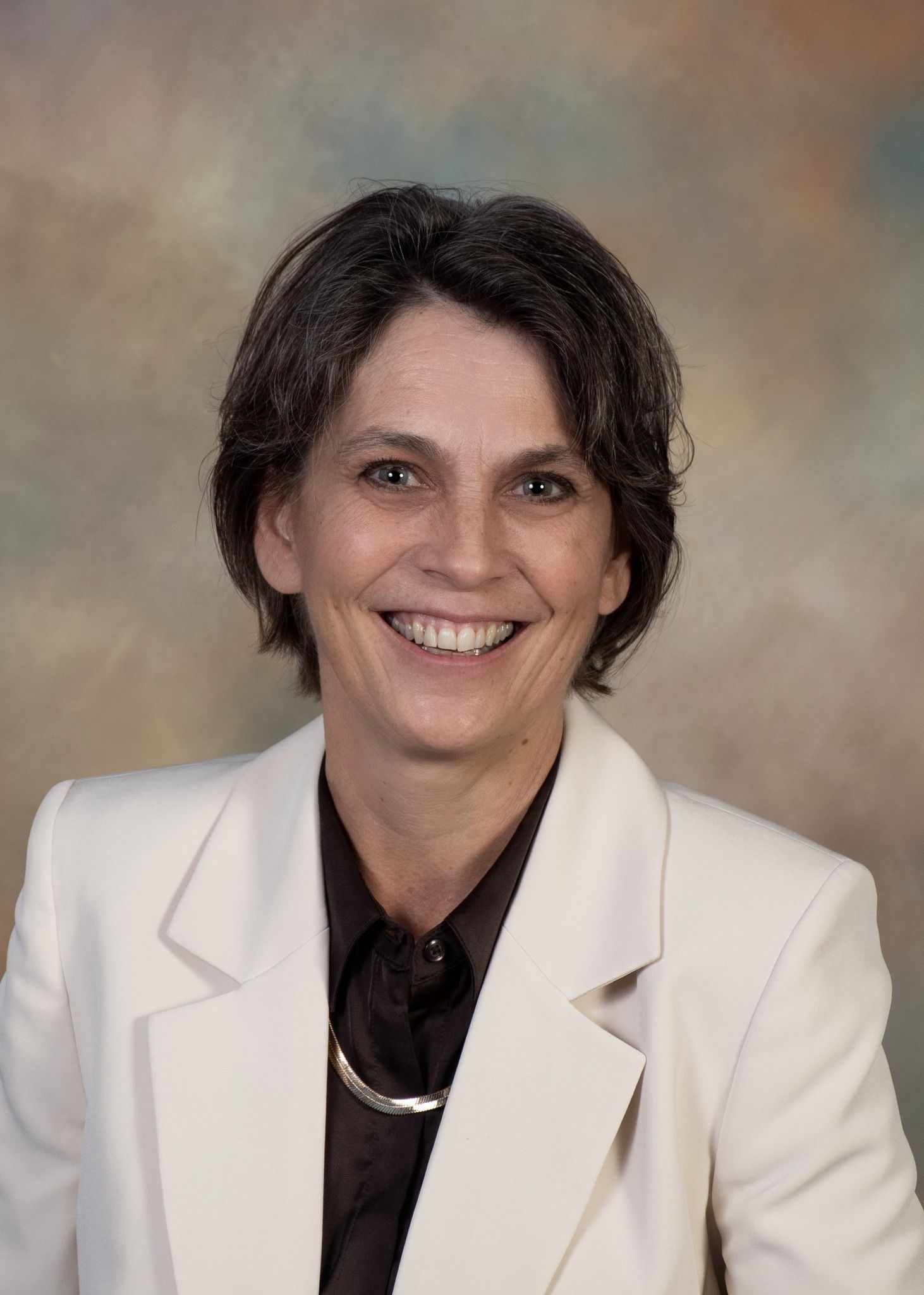
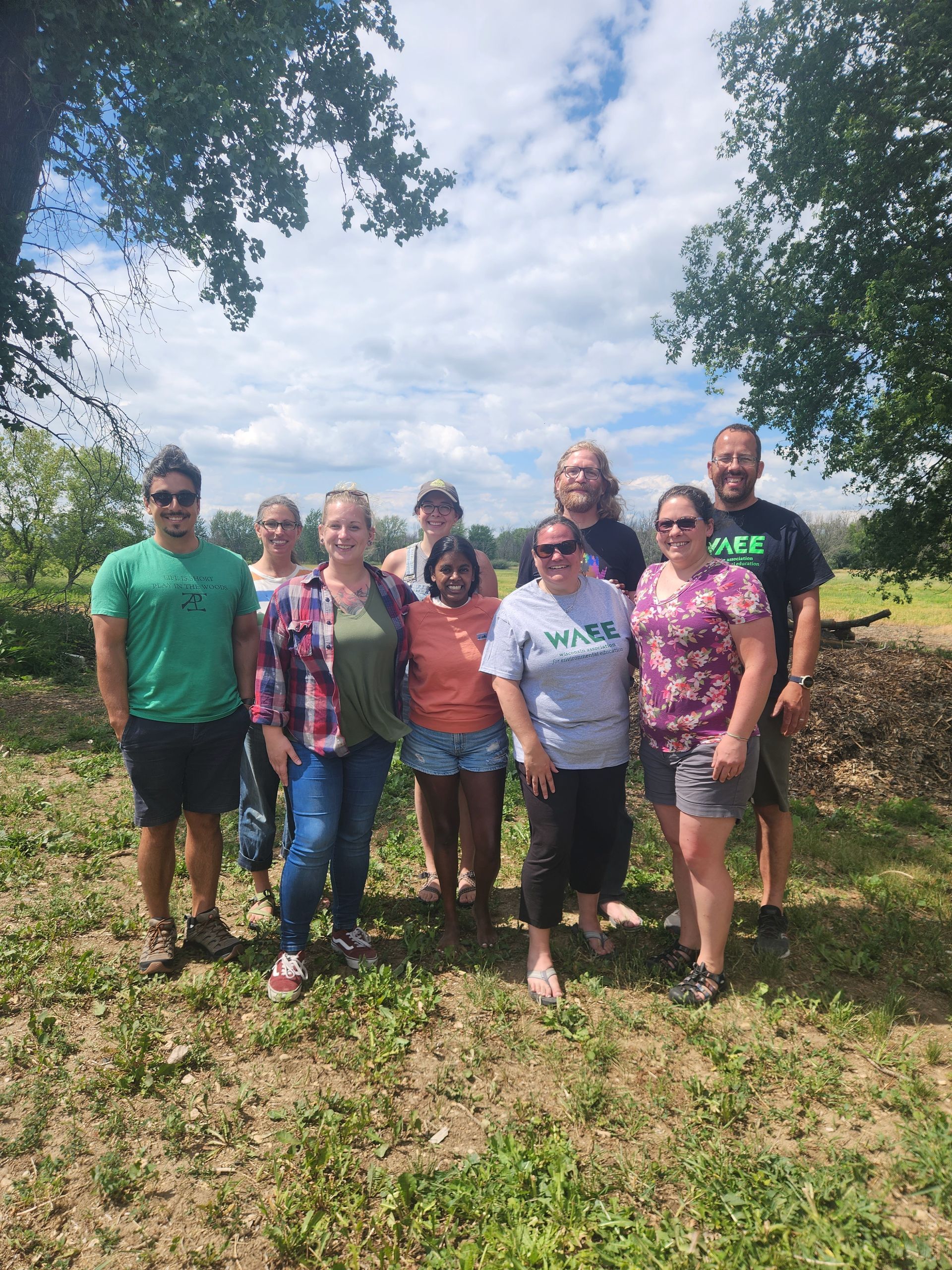
Lori Danz (She, Her, Hers), credits her father as being her foremost teacher who provided knowledge and inspired a love of nature. Now in her 32nd year of teaching, Danz brings nature directly to students as a high school biology teacher at Superior High School. She is also the coordinator of the school forest program delivered to all grade levels in Superior, Wisconsin. Danz strives to make the outdoors accessible for all students and teachers, with over 2,000 student visits to the Superior School Forest annually. Danz regularly provides in-district professional development on outdoor education and has served as a regular presenter at numerous state conferences for teachers.


In 2023, Danz was selected as the Wisconsin Teacher of the Year. One of the greatest gifts of receiving this honor was the opportunity to share the great work being done in our classrooms by the great teachers in our state, and to demonstrate the benefits of integrating outdoor education into all classrooms and content areas.


Danz earned a Bachelor’s of Science in Education and Master’s Degree in Curriculum and Instruction, both from the University of Wisconsin-Superior.


Flyer for Wisconsin Association for Environmental Education recruiting students to join their board at www.waee.org.
March 18, 2026
Calling High School and College Students!
By Xia Lowery March 16, 2026
Congratulations to our 2026 WAEE Environmental Education Awardees
By Xia Lowery March 11, 2026
Celebrating 2026 Administrator and Dave Engelson Award Nominees
Green-gloved hand holding a yellow gardening trowel against a green backdrop.
By Xia Lowery March 3, 2026
Celebrating 2026 Formal Educator Award Nominees
Close-up of a large, dark green leaf with water droplets, showing intricate veining.
By Xia Lowery February 24, 2026
Honoring the 2026 WAEE Student of the Year & Earthguard Nominees
Wisconsin outline filled with rainbow-colored evergreen trees, celebrating Pride.
By Xia Lowery February 19, 2026
Honoring the WAEE Eco-Justice Award Nominees
By Xia Lowery February 9, 2026
WAEE Non-Formal Educator of the Year Nominees
Green fern frond unfurling against a soft, blurred green background.
February 5, 2026
Spring Workshops from KEEP, LEAF and PLT!
December 22, 2025
Ambassadors, Badges, and Games from Green & Healthy Schools Wisconsin
December 22, 2025
Help plan the 2026 Conference in Green Bay!

RECENT ARTICLES