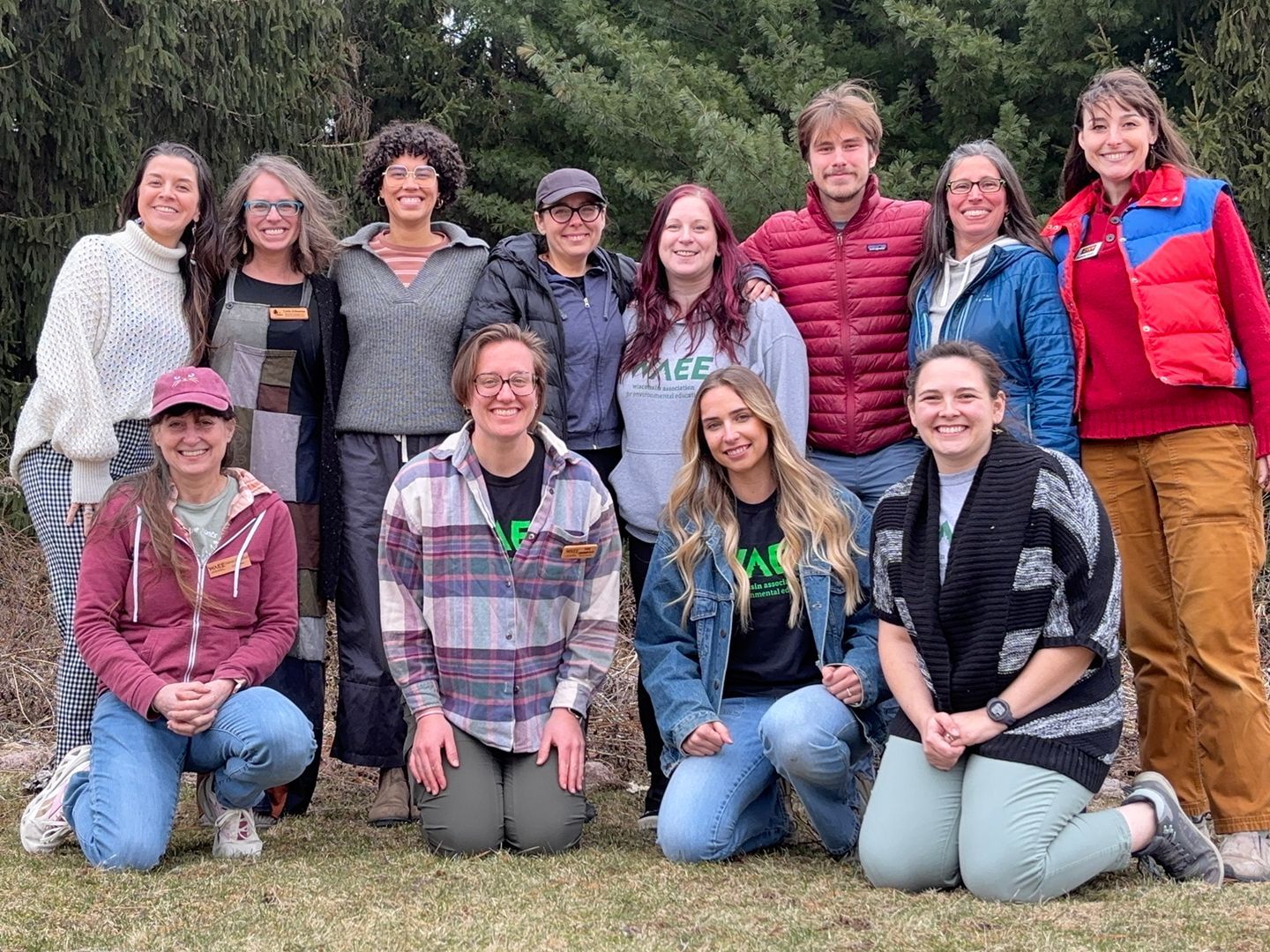
Last fall, I completed my Wisconsin Master Naturalist certificate through the course offered at the Schlitz Audubon Center north of Milwaukee. It was a glorious experience. In our studies, our teachers and the eighteen students in the class shared our love for the natural world and our longing to convey it to others. I had always gone to the woods and hills, but this was the first time I had ever been with a group of other people who cared about it just as deeply.
It was life-affirming. A couple of months later, a notification about continuing environmental education flashed up in my emails. The WAEE was offering an online course for environmental educators, and it would fulfil my Master Naturalist advanced training requirement for this year. But what really caught my attention were the words in the course description: “environmental accessibility for people with disabilities.”
I’m old enough to have gone to school with friends who were encased in steel braces because polio had paralyzed their lower bodies. A close friend in college was blind. It was a small women’s college, and we never thought much about her blindness, except that she needed to hold onto our arms if we went off campus where she didn’t know the paths. She was simply one of us, just as my friend with lasting impacts from polio had been one of us when I was younger. There were things the rest of us could do that our disabled friends could not, and we did not question that. We included them the best we could, and we tried to make the world around them more intelligible. It didn’t work very well, and that hurt, because we loved them, but we accepted that we could not change what they were up against.
It wasn’t until the WAEE accessibility course that I realized how narrow my mindset had been. It set off a whole new train of thinking. Yes, I’d been a good friend, but it had never occurred to me that my friends might have longed to be in the woods and fields and mountains every bit as much as I did. They might have wanted to feel the cool waters of a mountain lake, or splash in a waterfall, or identify a bird by its song, or camp out in a wild green space, too. To my shame, I had taken for granted that they had to accept their exclusion, and there was nothing anyone could do about it ― least of all, me.
And then I thought: suppose that my body kept me from hiking in the Kettle Moraine, or from river-walking, or finding spring ephemerals, or examining lichens and mosses with a magnifying glass (my newest passion) any time I felt like it? What if autism made me so anxious that my whole body and mind seized up whenever I tried something new? Suppose that I couldn’t see a pileated woodpecker or hear the sandhill cranes flying overhead? Suppose I was excluded from the woods and hills and waters? How in the world could I bear it?
The accessibility course came as a revelation. I knew vaguely about the ADA and the IDEA, and over the years, there was definitely greater general accessibility for people with disabilities. There were parking enhancements, restroom improvements, special doors and ramps for mobility, and hugely improved wheelchairs to navigate a wider range of spaces. These were all great. But the course made me see that something deeper was at stake. It had to do with seeing individuals with disabilities as fellow travelers, people who had longings every bit as valid and ardent as any fully abled person. With imagination, belief in possibility, and above all, with the insights of disabled people themselves, the world of nature could be accessible to everyone.
The Schlitz Audubon Center is doing a beautiful job of creating wheelchair accessible trails, and they offer “Sunflower” lanyards for people with hidden disabilities. Everything in the buildings is designed to be accessible. But the course got me thinking. Suppose I could offer my volunteer work there to support more Universal Design components? Birdability and birding by ear components? Braille signs along the trails and next to trees? CorpsTHAT ASL principles that not only engage with people with hearing loss, but which actually employ them in environmental care? Zoomazium ideas which draw children with every kind of disability into actual interaction with creatures?
Big dreams, and far beyond my capacity to achieve. But that’s just me, an elderly woman whose body isn’t quite what it used to be. I can still explore innovative ideas and reach out with them to people who also dream big and who are more capable than I. No human being has ever been perfectly free of some kind of burden. That is what the course brought home to me in its own special way. Whatever each of us offers in love and service to the environment and to one another is gathered into the goodness of the earth, our home.