Winter Wonderland

December 8, 2025

Bringing the Wonder of the Land To Your Students During The Winter Months

By Lori Danz, WAEE Board Member

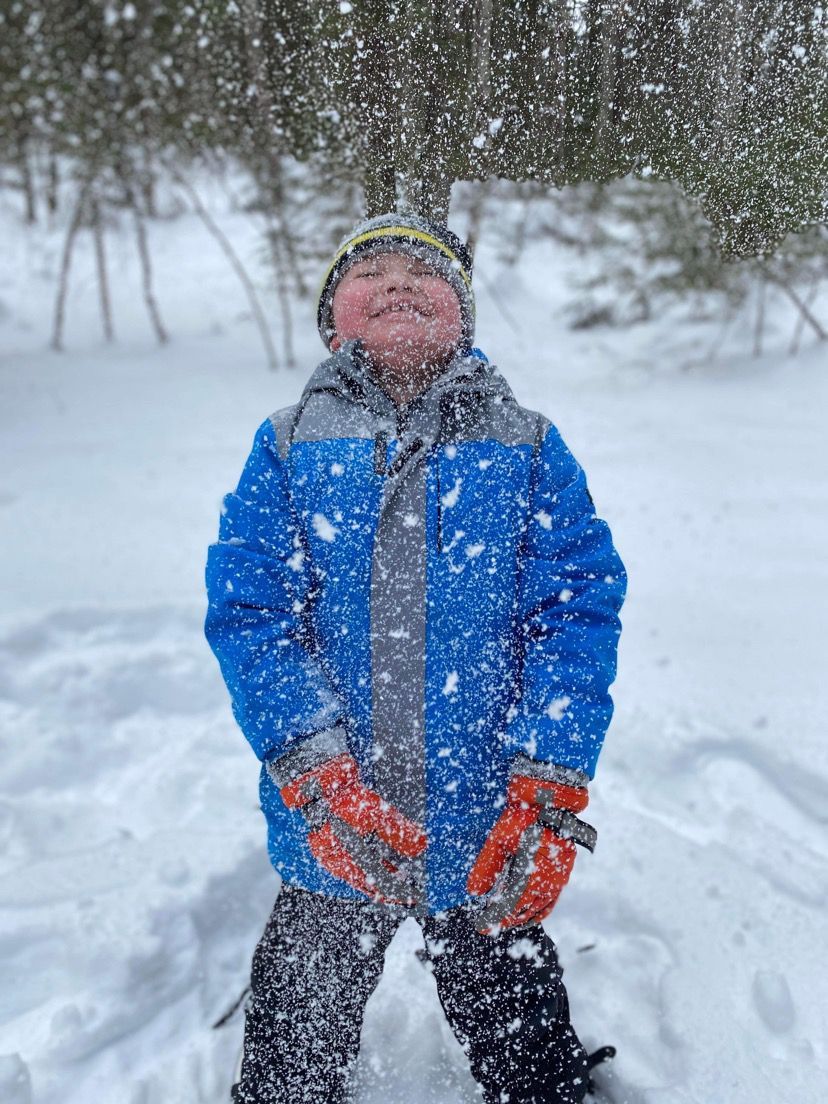
Winter entered Wisconsin quickly and furiously the last week of November, with both the Northern and Southern portions of the state being hit by two snow storms within one week. I took a group of second and fourth graders snowshoeing through the Superior School Forest this past week. A forest that they were the first to break trail on, with limbs of trees covered in a thick layer of snow. The gasps I kept hearing from those little forest explorers trudging along behind and next to me kept me warm. I heard several make comments about a winter wonderland or feeling like they were in a giant snowglobe. It was a physically demanding hike for those compact legs, and all definitely met their physical education requirements for the week. There were red cheeks, and a lot of heavy breathing as we returned to our indoor classroom. Yet, not one child complained about how much work it was, or that they didn’t want to participate. Their questions about the tracks they saw, the wonder of seeing a pile of pine cone scales and the accompanying “cone cobs” left by the hungry squirrel who used that site as their dining room, truly proves there is wonder in the land, no time more than in the winter months. As teachers, I feel there is no better time of the year to accomplish one of our greatest responsibilities; to provide educational experiences that allow our students to feel wonder and excitement about learning.


In my role as Superior School District’s School Forest Coordinator and Outdoor Educator, I am often asked if groups visit the school forest in the winter. The assumption being, I guess, is that it is either too cold to learn outdoors, or there aren't any lessons to teach during the winter months. In the spirit of the holiday season, let me share the joy I feel to be able to spread the cheer of some winter lessons you can offer as gifts to your students over the next few months.


So, if you are struggling with ideas to take your classroom lessons outdoors during the winter months, let me offer a few ideas.

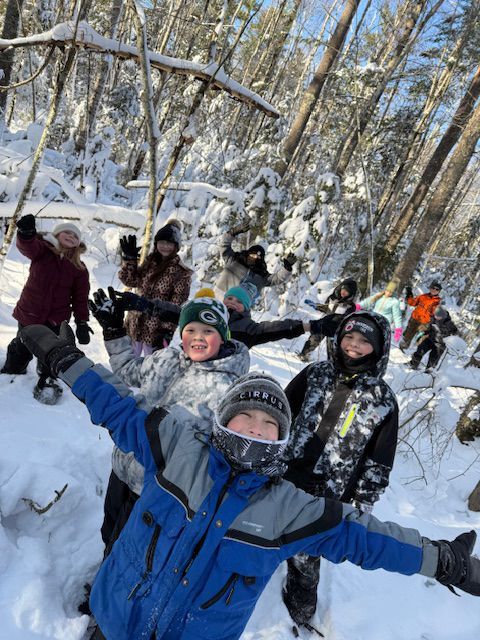
Snowshoeing

  • If your district is fortunate enough to own classroom sets of snowshoes, there are many excellent lesson plans online related to physical education, human physiology or the physics of snowshoes. 
  • Don’t limit your thinking to only science related content. Our snowshoe hike this past week was just the foundation and inspiration of several excellent writing prompts; “Why do you think the squirrel chose the spot in the forest to eat its pinecones compared to other areas?”, or “After exploring the forest trails on snowshoes, what are several things you were able to learn about the habits of animals in the forest during the winter?”

Math

  • Collect empty spray bottles and fill with colored water. Take students outside to practice math problems in the snow by using their spray bottles as their writing tools and the snow as their “paper”. 
  • Look for examples of symmetry in nature. Looking at snowflakes using a hand lens is an excellent way for students to see symmetry. Collect leaves and cut them in half. Glue the leaf onto a piece of paper and have students draw the missing symmetrical side.
  • Measure the volume of a container of collected snow. Have students predict, and then measure the volume of the liquid of that snow after it has melted.

ELA

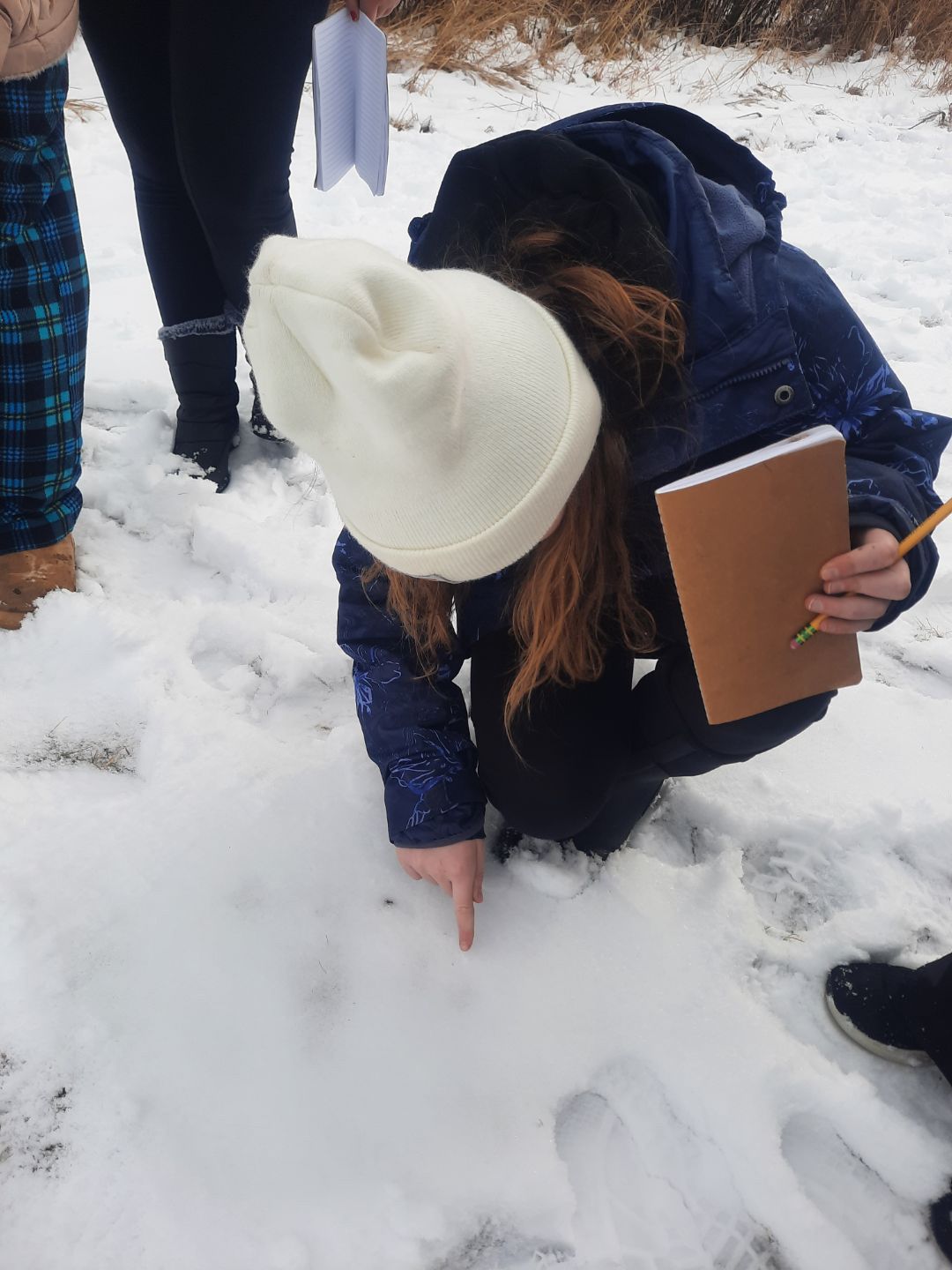
  • Nature offers the inspiration for many writing prompts. Take note of what students notice when they are outside with you and what they wonder. Use their curiosity as research prompts or opportunities to write fictional stories. When we are outdoors, we talk about the stories that animals tell us with the tracks or other signs they leave in the snow. Although we don’t always have direct observations as to what happened, we can gain enough clues to tell a story. Have students write their stories. 
  • Take a novel or short story that is set in the winter. Have students actually read that story while outdoors. I have taken high school on winter hikes where we read excerpts from the book “To Build a Fire”, written by Jack London. Students gain a whole new perspective of what the main character is experiencing when they are out in the cold reading that story, trying to turn pages without gloves or mittens on. Obviously, use caution to protect your students from frostbite.

STEAM

  • Winter is an excellent time to fly hot air balloons due to density differences in cold air and hot air. Have students design hot air balloons and then take them outdoors to test their designs.
  • If you search online for “frozen frogs lesson plans” or “jello frogs winter” there are many online lessons where students design structures or habitats to prevent jello frogs or other models of frogs from freezing. These lessons can be integrated with other science concepts such as why many frogs and other amphibians can withstand freezing temperatures throughout the winter.

Science

  • Winter offers the only opportunity of the year for students to learn about and study the subnivean zone, that magical layer between the ground and the overlaying layer of snow. Have students build models, read about how animals use this zone for survival. Take temperatures of the air above the snow, and then at various depths of snow layers, right down to the subnivian zone. Students will be surprised to learn that the subnivian layer is often warmer than the air above the snow.

Culture and History

  • Winter is a perfect time to learn about the logging history of Wisconsin as most logging camps operated during the winter months. Have a Lumberjack Olympics where students have to compete pulling logs in sleds, answer trivia questions related to logging, even use saws to cut logs into tree cookies.
  • Introduce students to Indigenous games and traditions such as snow snakes. In Superior, one of our fourth grade classes partnered with our high school woods classes to design and build their own snow snakes.

Art and Play

  • Have students make snow candles. Buy candle wicks from a hobby store. Melt down old crayons. Take students outside to dig a small hole in the snow. When the wax melts, simply take the melted wax outside and pour it into their holes. Add a wick, and after the wax hardens, students will be excited to see the interesting shapes of their candles.
  • Make snow angels
  • Go sledding
  • Build a snowman and dress it to represent a favorite storybook character.
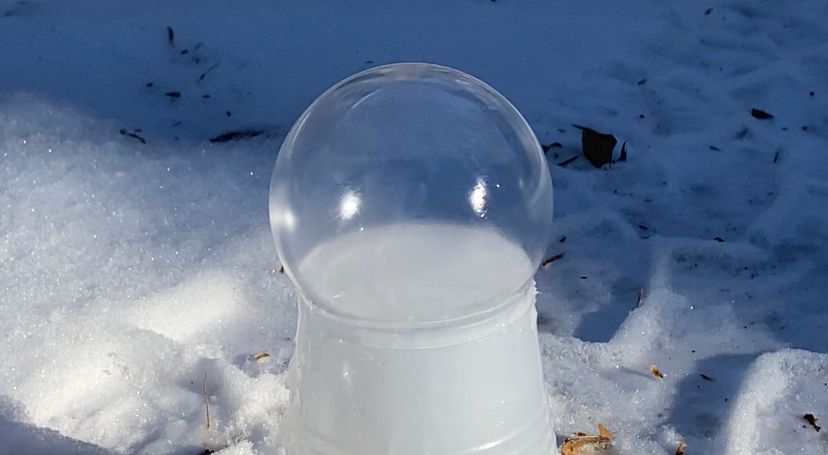
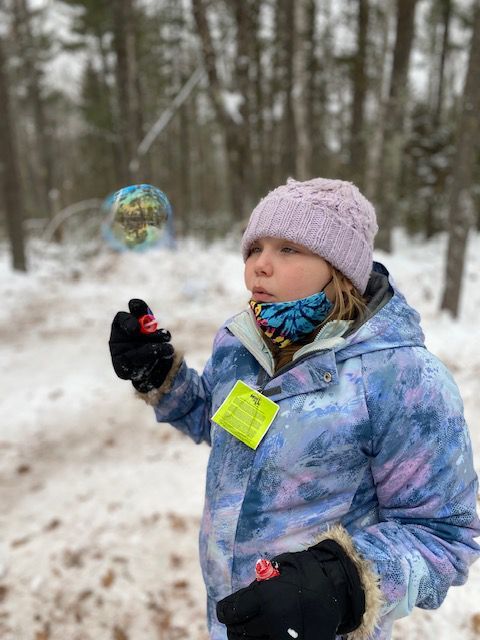
  • Buy or make a bubble solution for your class. You can make bubble wands out of pipe cleaners. On very cold winter days, take your students outside to blow bubbles and watch them freeze. They will be amazed to watch the crystals of ice on the freezing bubble form right in front of their eyes! A  hint that helps to prevent bubbles from popping as easily is to set paper cups upside down to set the bubbles on. Place a small amount of bubble solution on the bottom of the cup. This seems to help to prevent the bubble from popping as easily when set on the cup.

Coincidentally, the same week that I was thinking about writing this article, I watched the episode of "Famous Last Words," a Netflix series where the host interviews famous people, but does not release the interview until after the death of that person. The episode I watched was Jane Goodall’s final interview. There was one minute of that one hour show that impacted me greatly. It was when the host, Brad Falchuck, commented that Jane never seemed to get bored while observing her chimpanzees for hours and hours at a time. Her reply was, “In nature there is always something to watch. Nature is always filled with things to look at. It is impossible to get bored.” 


So let's listen to Jane and the wise words of the second and fourth graders who spent a part of their day last week snowshoeing through our winter wonderland. Our land offers the wonder that will always inspire an excitement about learning.


Lori Danz (She, Her, Hers), credits her father as being her foremost teacher who provided knowledge and inspired a love of nature. Now in her 32nd year of teaching, Danz brings nature directly to students as a high school biology teacher at Superior High School. She is also the coordinator of the school forest program delivered to all grade levels in Superior, Wisconsin. Danz strives to make the outdoors accessible for all students and teachers, with over 2,000 student visits to the Superior School Forest annually. Danz regularly provides in-district professional development on outdoor education and has served as a regular presenter at numerous state conferences for teachers.


In 2023, Danz was selected as the Wisconsin Teacher of the Year. One of the greatest gifts of receiving this honor was the opportunity to share the great work being done in our classrooms by the great teachers in our state, and to demonstrate the benefits of integrating outdoor education into all classrooms and content areas.


Danz earned a Bachelor’s of Science in Education and Master’s Degree in Curriculum and Instruction, both from the University of Wisconsin-Superior.


December 1, 2025
Nature Everywhere
Group of people at an awards ceremony; holding trophy; dressed formally in an indoor setting.
November 3, 2025
Celebrate Excellence in Environmental Education with a Nomination!
Five people stand in front of a
October 23, 2025
Lori Danz Busts Myths about Outdoor Education  Written by Lori Danz, School District of Superior School Forest Coordinator and WAEE Board Member
Group of people standing outdoors, smiling. Sunny day, green grass, trees.
October 15, 2025
Join the WAEE Board of Directors!
October 13, 2025
Getting to Know the Natural Resources Foundation of Wisconsin
October 8, 2025
How Wisconsin Educators Are Using Water to Inspire Outdoor Learning
Six women standing together
September 5, 2025
Help us celebrate excellence!
September 5, 2025
Inspire Funders with Your Ideas!
Man holding binoculars looking through pine branches surrounded by birds
August 26, 2025
Birding is for Everyone: A Journey Through Joy, Nature, and Belonging
August 20, 2025
Make Your Voice Heard: August 2025

RECENT ARTICLES