Teacher Educators Network for Environmental Education (TENFEE)
This network is open to all Wisconsin Educator Preparation Programs’ faculty and adjunct instructors who teach science, social studies, art, health, environmental education, early childhood, or related topics.
What We Do
The Teacher Educator Network for Environmental Education (TENFEE) is a grassroots network of instructors in educators preparation programs (EPPs) working to advance education for environmental literacy and sustainability by hosting:
A communication hub
for environmental education in teacher education programs to share information from EPPs and other agencies through the TENFEE List-serv,
Annual meetings
to maintain communication and aim to improve EPPs in EE, including regional networking, advocating for EPPs inclusion of EE, and provide input to DPI regarding licensing, and assist teacher education programs to be accountable for including EE in teacher education programs, utilize the NAAEE Guidelines for the Preparation and Professional Development of Environmental Educators, and Create support materials to guide teacher educators, and
Research opportunities
in higher education including research of graduates from EPPs, environmental literacy of pre-service teachers, EPP implementation of environmental education.
Communication
- Teacher education programs share information with one another.
- Information from other agencies is shared through TENFEE communication channels
- The group meets at least annually to maintain communication and aim to improve teacher education programs in EE.

Advocate for the Inclusion of EE in Education Preparation
- Provide input to DPI regarding licensing
- Assist teacher education programs to be accountable for including EE in teacher education programs
- Utilize the NAAEE Guidelines for the Preparation and Professional Development of Environmental Educators
- Create support materials to guide teacher educators
Serve as an Umbrella for Research
- Research of graduates from teacher education programs
- Environmental literacy of pre-service teachers
- Teacher education program implementation of environmental education
Support in Partnership by

TENFEE Planning Team
- Becca Franzen, University of Wisconsin–Stevens Point
- Victoria Rydberg-Nania, Wisconsin Department of Public Instruction
- Amy Lindgren, Concordia Univeristy
- Shannon Davis-Foust, UW-Oshkosh
- Heather McCombs, USBGC
TENFEE is free and open to any instructor in a Wisconsin educator preparation program to join.
There are many ways to interact too.
Join the conversation and share resources on our Facebook Group (need to be logged in).
Get email updates through the TENFEE List-serv (Google Group). Subscribe or view past messages (may need to be signed into Google).
Learn About Past Summits
2025: Theme of Event
Date and Location
This is the text area for this paragraph.To change it, simply click and start typing. Once you've added your content, you can customize its design by using different colors, fonts, font sizes and bullets. Just highlight the words you want to design and choose from the various options in the text editing bar.

2024: Showcase of Environmental Education in Teacher Preparation Programs
Tuesday, June 11, 2024 - 9:00 a.m. to 3:00 p.m
We know that getting outside for even five minutes has incredible mental health benefits. WAEE's Teacher Educator Network for Environmental Education (TENFEE)—or people who help prepare PK-12 teachers—held their 2024 annual event at Schmeeckle Reserve in Stevens Point this year to minimize screen time and maximize outdoor time.
Sessions included:
- ZOOM: Ecological Perspective-Taking with Young Children, Amy Lindgren, Concordia University
- The LEED Curriculum Lesson Plans, Heather McCombs, USGBC
- Climate Change and the Web of Life, Shannon Davis-Foust, UW-Oshkosh
- Language and Environmental Education, Diego Roman and Angela Lake, UW-Madison
- Using iNaturalist as a tool to run your own BioBlitz, John Dobyns, St. Norbert’s College
- Connecting to the Natural World: Incorporating Indigenous Stories and Knowledges through Reading Braiding Sweetgrass in Science and ELA, Michelle Falter and Melanie Jackson, St. Norbert College
- Using Team-building in the Outdoors to Make Connections and to Teach Social Emotional Learning, Lori Danz, School District of Superior
- The Landfull landfill curriculum: Gratitude-based waste management education, Tommy Mackey, Northland College
2023: Infusing Inclusive, Equitable and Culturally Relevant Pedagogy Naturally in Educator Preparation Programs
Wednesday, May 31- Thursday, June 1st, 2023
Wisconsin Teacher of the Year and WAEE Board Director, Lori Danz, was one of the presenters. A lifelong educator and school forest coordinator in Superior, Lori knows that social-emotional learning and emotional regulation is critical before her students can engage with her content. That is one of the reasons she integrates team building challenges in her school forest programming and shared her activities with participants. This workshop was held at Upham Woods in Wisconsin Dells.
Participants gained benefits such as:
- Being a part of an ongoing statewide network to advance environmental education in educator preparation programs (EPPs),
- Applying theory to practice through a project to advance equity in their classroom,
- Contributing to the creation of a toolkit that could be used in EPPs as well as serve as a resource for educators in the field,
- Receiving a copy of Cultivating Genius or Unearthing Joy by Dr. Gholdy Muhammad, and
- Receiving a $250 stipend payable upon submission of a completed project.
2022: Retention through Wellness and Nature in Educator Preparation Programs
Online Meeting
The 12th annual summit was held online for the third year in a row due to the pandemic. The pandemic had taken a toll on the mental health of students and staff. Educator preparation programs explored how to be more intentional in supporting the wellness of students through a connection to nature to help retain them in programs and in the teaching profession.
2021: Taking Education Outdoors: A Toolkit for Schools
Online Meeting
This summit was funded by the Wisconsin Society of Science Teachers and the Wisconsin Department of Public Instruction. Resources were developed through the funding for participants in this workshop. A partnership with the Connectivity Project helped make this event possible.
Participant Project Abstracts:
- Nature Journaling as a connection practice
One activity that can be used in the classroom are nature journals. This outline created by Dr. Patty Born can be utilized as a resource for teacher educators with step-by-step instructions. This activity chronicles time outdoors with a focus on physical health, emotional health, and community health/equity. View resource - Teaching Science Outside
This resource outline created by Elizabeth Crotty takes into consideration on how educators can take their classes outdoors. It reviews what is needed to be considered before taking classes outdoors and what communication is needed beforehand as well. This outline covers a planning phase including a preparation checklist. View resource - Model for Teaching Science Curriculum
Project Learning Tree’s “Explore Your Environment” can be utilized as a model to pre-service science curriculum instruction. The outline created by Dr. Kathleen Kremer explores NGSS concepts in the classroom and references PLT curriculum features. Included in this outline are other resources related to Place-Based Learning, Connectivity, Inquiry-Based Learning, Questioning, and Nature of Science (NOS). View resource - Learning Outside: A Logistics Checklist for Before, During, & After Learning Outside with Your Students
Starting classroom learning outside can be difficult but this checklist created by Dr. Kendra Liddicoat, Dr. Amy Lindgren, Karla Lockman, Dr. Heidi Masters, and Dr. Jean Weaver covers may resources for educators to get started. Within this checklist, it covers the before, during and after stages of teaching outside. Included in each section are hyperlinks that can give more resources to guide educators in their preparation. View resource - Redefining Curriculum—Mapmaking
One activity that can be utilized in the classroom is map-making. This outline created by Dr. Randa Suleiman is adapted from David Sobel “mapmaking with children” and highlights objectives goals, materials, additional resources, and a specific project outline relating to a creation of a Rebus Treasure Hunt. This activity is thoroughly integrated with socio-emotional learning (SEL) while prioritizing diversity, equity, and inclusion (DEI). View resource - Empowering Educators in Marginalized Communities to Connect, Explore and Engage in their Greenspaces: A Summit for Pre-Service and In-service teachers in Marginalized Schools
This outline created by Dr. Corey L. Thompson is heavy with resources related to environmental education curriculum and green space experiences. As Thompson connected with multiple experts in the field, this guides pre-service and in-service teachers to the multiplicity of resources available to them to help introduce students from marginalized populations to environmental education and the great outdoors within their communities. Included are resources related to the LEAF, KEEP, UW and WICCI covering clean energy, school forests, restoration, conservation issues and a variety of other environmental related topics. One section also includes resources pertaining to Native Nations. View resource - Forest Bathing Guide: For Educators
One activity that can be used in the classroom is the facilitation of forest bathing. This guide created by Jan Wellik, EdD, provides highlights of activities from M. Amos Clifford’s book – Your Guide to Forest Bathing. Through this guide, educators will be able to understand what forest bathing does and how it has health and social-emotional benefits. There is a group activity focus that creates an overall embodied awareness and other experiences for students. Other forest bathing resources such as books and videos are also mentioned. View resource - “Adventure” Field Trips Planning Template
One activity that can be used in the classroom are adventure field trips. This template created by Dr. Kevin Zak utilizes David Sobel’s design principles for educators. Example tasks through the adventure field trips are included as well as specific curriculum standards in which this activity covers. View resource
2020: Connect, Explore, Engage with Educator Preparation Programs
Online Meeting
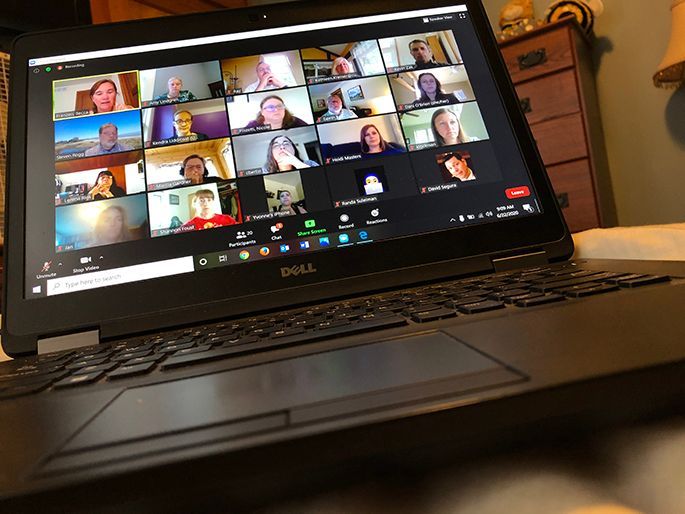
The 2020 TENFEE Summit was held online due to the pandemic with funding from the Wisconsin Department of Public Instruction. Participants created Environmental Literacy Plans and uploaded them to WISELearn.
2019: Energizing Pre-Service Teacher Education Programs and In-Service Teacher Collaborators
In-Person Workshop
In 2019 the TENFEE event was held at the Wintergreen in the Wisconsin Dells and funded by Wisconsin Society of Science Teachers and KEEP—Wisconsin's K-12 Energy Education Program. Faculty members and K-12 educators paired up to complete energy education research projects.
Major Topics Included:
KEEP Activities:
- Walking through activity book (battery example)
- Explore Wind and Sun
- Food Chain Game
- Coal Mining Cookies
Project Designs in Groups:
- Energy efficiency
- Wind
- Natural Resources
- Teacher efficacy/resources
- Learning assessment/extension
- Green spaces/food energy
Other Activities:
- Name Toss Game
- Environmental Literacy and Sustainability Standards
- Increased conversation in districts about enviro ed due to new standards
- Switching terminology from EE to ELS (envrionmental literacy & sustainability)
- Outside activity: Environment is not away featuring “Anyone Who” game
- KEEP Introduction
- Research Method Development
2018: Wisconsin Standards for Environmental Literacy and Sustainability
In-Person Workshop
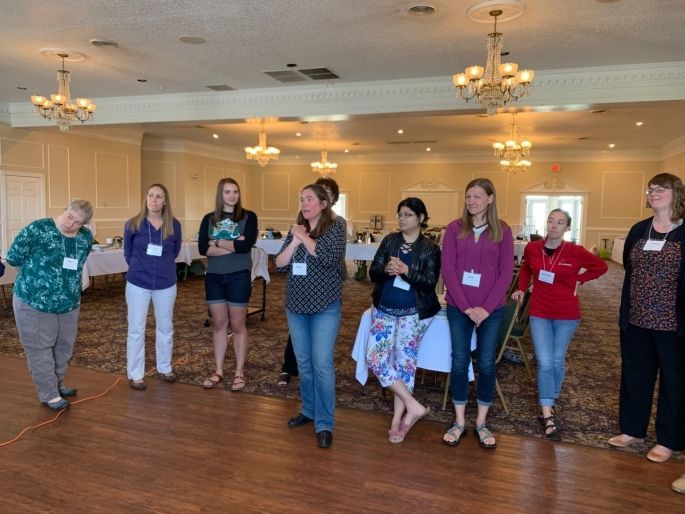
This event was held at the Wintergreen in the Wisconsin Dells with funding provided by Wisconsin Department of Public Instruction for WISELearn.
Major Topics:
- Wisconsin Standards for Environmental Literacy and Sustainability
- Project WILD, Project WET, Project Learning Tree Educator Certification
Product:
- Lessons related to the three strands in the standards: Connect, Explore, Engage were created.
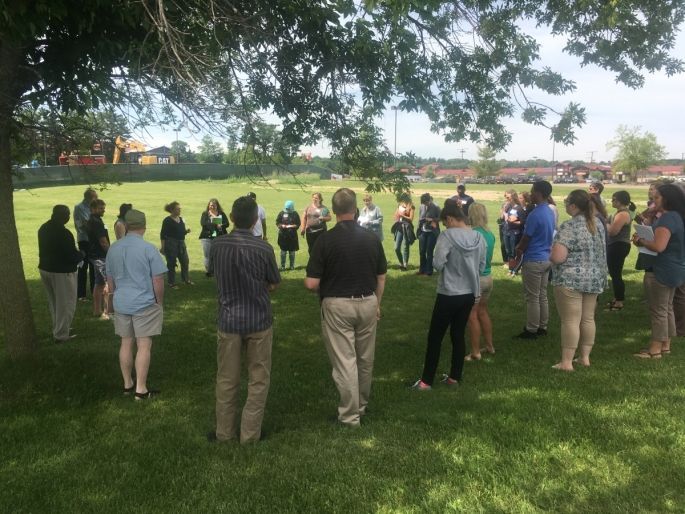
2017: Place-based Learning
In-Person Workshop
This event was held in July in Madison with funding from the National Science Foundation with a follow-up meeting held in January 2018.
Environmental Education Activities for Teacher Educators: A Sampling from Wisconsin
These environmental education activities were created for teacher educators by teacher educators. Through a grant from the National Science Foundation (DRL 1638420), members of Wisconsin’s higher education programs were invited to participate in two workshops that provided professional development and time to create these activities. The teacher educators have also implemented these activities in their own courses.
The resource includes 34 activities that could be used to teach a range of disciplines and licensure levels. Additionally, they are aligned with the Professional Development of Environmental Educators: Guidelines for Excellence (NAAEE, 2017).
Major Topic:
- Place-Based Education with guest David Sobel
Other Activities:
- EE in Wisconsin Presentation
- NAAEE Guidelines Presentation
- Creating school Team Plan Intro
- Model Outdoor Activity
- Interest Group formation and Discussion
- Personal project
- Interest Group Activity Sharing
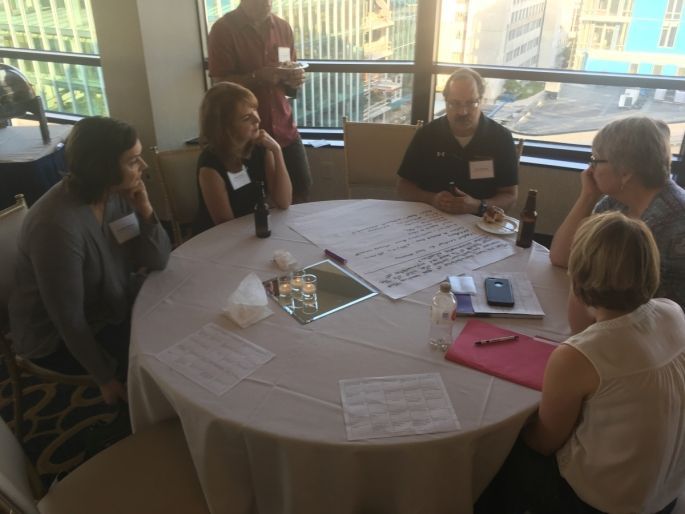
2016: Project Learning Tree Facilitator Training
In-Person Workshop
This event was held by the shores of Lake Michigan at Concordia University with funding provided by the Wisconsin Environmental Education Board, with in kind support from Concordia University and Project Learning Tree.
Major Topics:
- Project Learning Tree Facilitator Training
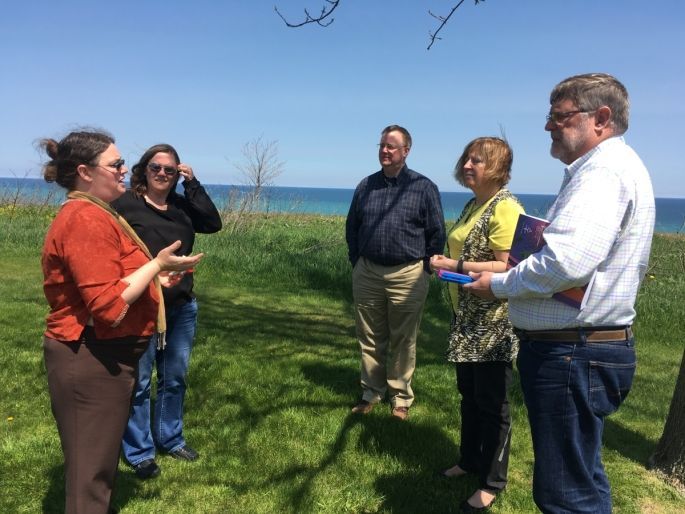
2015: NAAEE Guidelines for Excellence: Professional Development of Environmental Educators
In-Person Workshop
The focus of this workshop was to discuss the NAAEE Guidelines for Excellence: Professional Development of Environmental Educators. It was funded by the North American Association for Environmental Education (NAAEE) and was hosted in partnership with the Midwest Environmental Education Conference.
2014: NAAEE Guidelines for Excellence: Community Guidelines
In-Person Workshop
This event was held in Stevens Point during the Wisconsin Association for Environmental Education annual conference with funding from the North American Association for Environmental Education.
Major Topics
- NAAEE Guidelines for Excellence: Community Guidelines Workshop
2013: Community-based Learning
In-Person Workshop
This event was held in La Crosse during the Wisconsin Association for Environmental Education annual conference with funding support from Field Edventures (formerly Wisconsin Green Schools Network).
Major Topics:
- Basics of Community-Based Learning Presentation
- Overview of using WGSN Lab Schools for Student Training and Practicum Sites
- General Research Discussion
Turkey Research Discussion
2012: Wisconsin’s Plan to Advance Education for Environmental Literacy and Sustainability in PK-12 Schools
In-Person Workshop
This event was held at the Mead Wildlife Area and funded through a grant from the Wisconsin Environmental Education Board.
Major Topics
- Overview of Wisconsin’s Plan for Environmentally Literate and Sustainable Communities, Wisconsin’s Plan to Advance Education for Environmental Literacy and Sustainability in PK-12 Schools including Disciplinary Literacy
- Presentation of Quantitative analysis of EE in elementary teacher education programs
- Presentation: Next Generation Science Standards, Common Core Standards, and implications for new environmental education standards
- Licensing and Continual Review Process
Additional Activities
- Mead Tour w/ discussion on how do we integrate community resources into pre-service programs
- Working Groups
- Establishing criteria for preservice teacher preparation in EE and determining strategies to support and monitor compliance (reference NCATE and NAAEE guidelines) to provide equity for both in-state and out-of-state teacher
- Statewide Env. Literacy Assessment
- Identification of other research needs and opportunities in EE (following up on ideas from TENFEE 2011); WEERD updates
- Call to Action
2011: Pre-Service Educator Preparation Study Overview
In-Person Workshop
The 2011 summer gathering of educator preparation programs was held at the Aldo Leopold Foundation in Baraboo, Wisconsin. Funding was provided by the Wisconsin Environmental Education Board Research Committee.
Major Topics:
- Teacher Preparation Study Overview
- Environmental Education in PK-12 Schools PI-8, PI-34
- No Child Left Inside: Wisconsin’s Plan to Advance Education for Environmental Literacy and Sustainability in PK-12 Schools
Additional Activities:
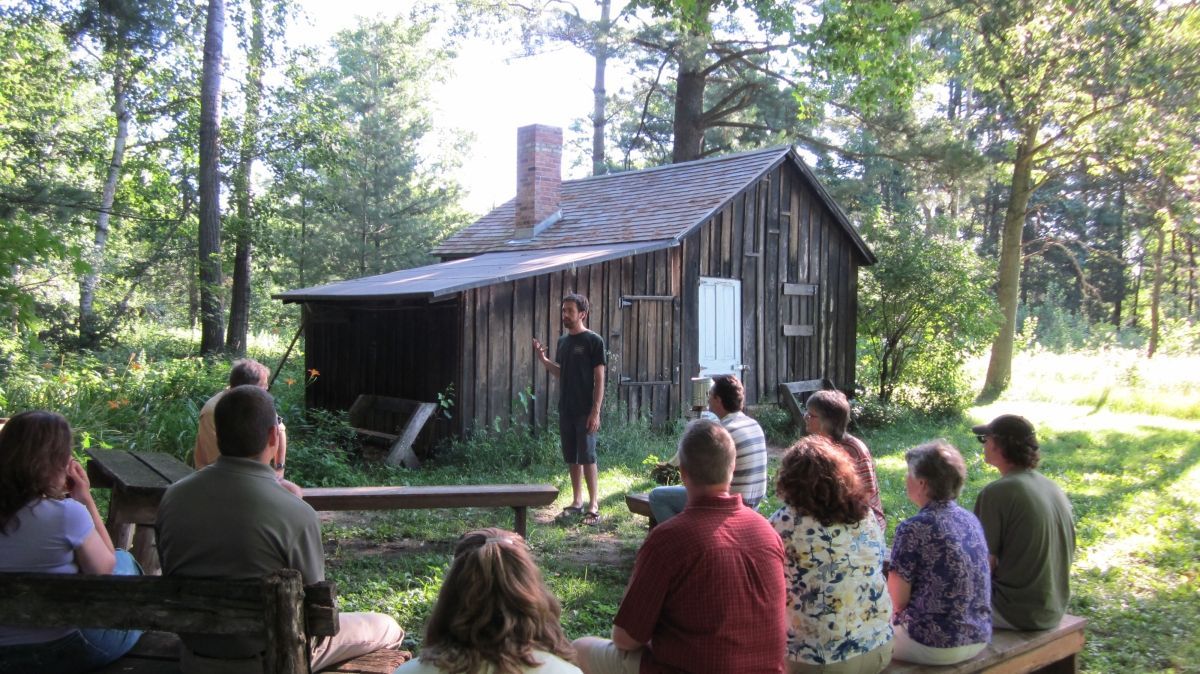
- Leopold Shack Tour
- Evening Film - A Fierce Green Fire
Educator Preparation Program Case Studies:
- UW-Stevens Point and UW-River Falls
- Wisconsin Lutheran College
- Edgewood College and Northland College
Discussions:
- Brainstorming challenges to get interdisciplinary involvement (Flip chart activity)
- Future of Collaboration
- How do we address challenges to interdisciplinary approaches?
- How does your institution prepare teachers to meet these State Environmental Literacy Goals 1 and 2?
- How does environmental education fit across your campus, within as well as beyond the school of education?
Opportunities for Research: How do you use this information moving forward?